


Cultural Capital of Southern Maharashtra
Sangli is a culturally rich and progressive city located in western Maharashtra, known for its deep roots in art, music, education, and tradition. Situated on the banks of the Krishna River, the city blends historical heritage with modern urban growth.
Often referred to as the cultural capital of southern Maharashtra, Sangli has a strong legacy of classical music, theatre, and literature. The city has produced renowned artists and scholars and continues to nurture creativity through its vibrant cultural events and institutions.
Sangli is also an important educational and medical hub, attracting students and visitors from across the region. Its planned roads, green surroundings, and peaceful lifestyle make it one of the most livable cities in the area.
While agriculture and trade have shaped Sangli’s economy over the years, the city today stands as a symbol of balance—honoring tradition while embracing development. Warm people, rich culture, and a strong sense of community define the true spirit of Sangli.
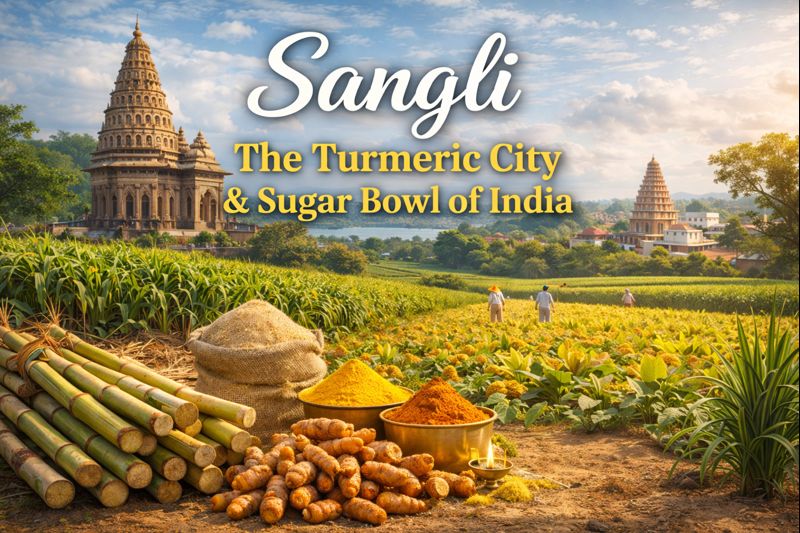
Sangli: The Turmeric City & Sugar Bowl of India
Sangli is one of India’s most important agricultural and cultural centers, widely known as The Turmeric City and The Sugar Bowl of India. Blessed with fertile soil and the lifeline of the Krishna River, Sangli has been a powerhouse of sugarcane cultivation and turmeric production for decades.
The region contributes significantly to India’s sugar industry through its network of sugar factories and cooperative movements, making it a backbone of the rural economy in western Maharashtra. Sangli’s turmeric, celebrated for its rich color, aroma, and quality, is traded across the country and exported internationally, giving the city global recognition.
History & Heritage
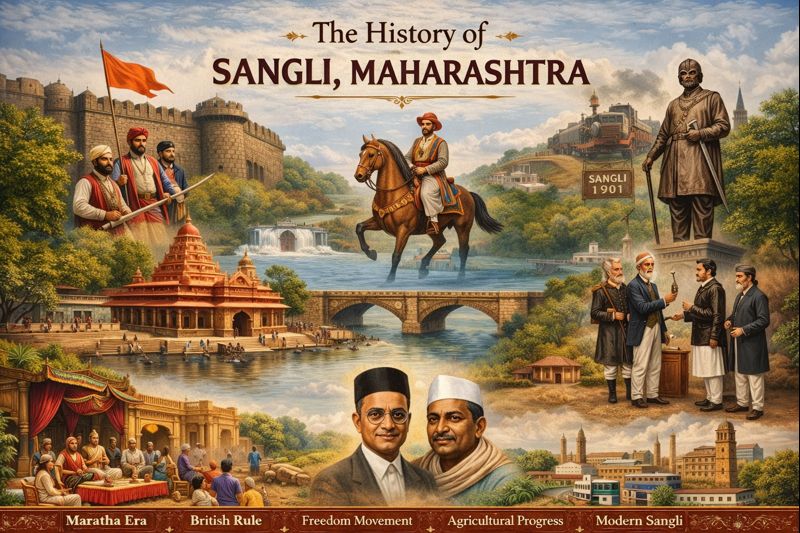
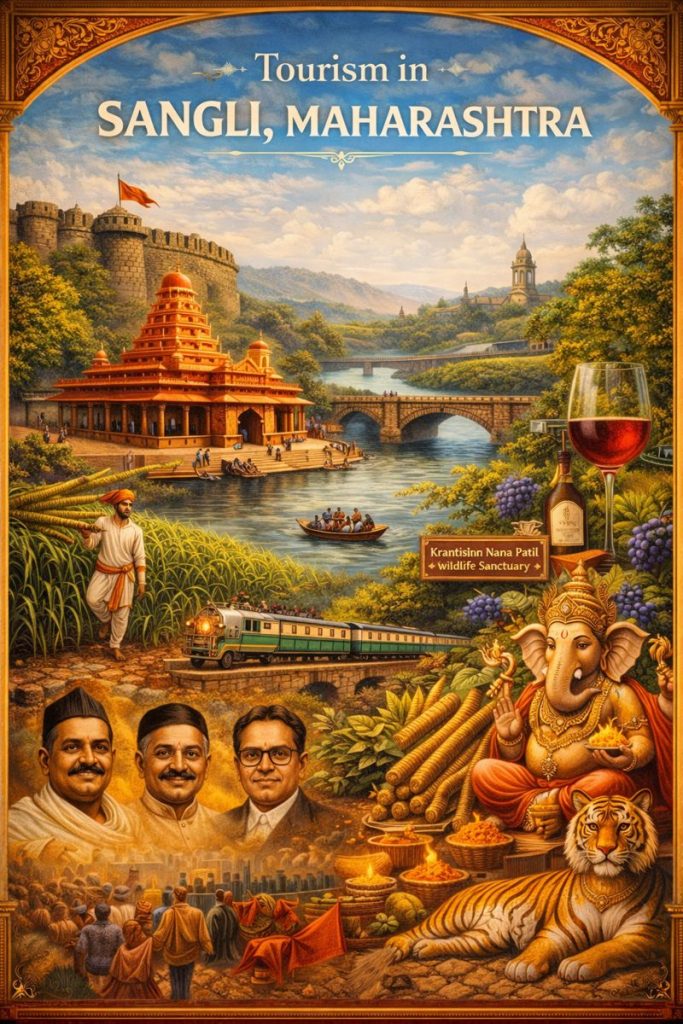
This high-resolution visual showcases the rich history and cultural heritage of Sangli, Maharashtra, blending tradition, progress, and identity into a single panoramic composition. The image highlights Sangli’s evolution from the Maratha era through British rule, the freedom movement, and into a modern agricultural and urban center. Iconic elements such as historic architecture, river bridges, local leaders, traditional markets, and fertile farmlands reflect Sangli’s deep roots in culture, governance, and agriculture. Warm tones and cinematic lighting emphasize Sangli’s legacy as a city of heritage, resilience, and growth, making the image ideal for official websites, educational content, and cultural showcases.Sangli has a rich and distinguished history rooted in the cultural and political heritage of Maharashtra. The region gained prominence during the Maratha period and became an important princely state under the rule of the Patwardhan dynasty, who were close associates of the Peshwas of Pune
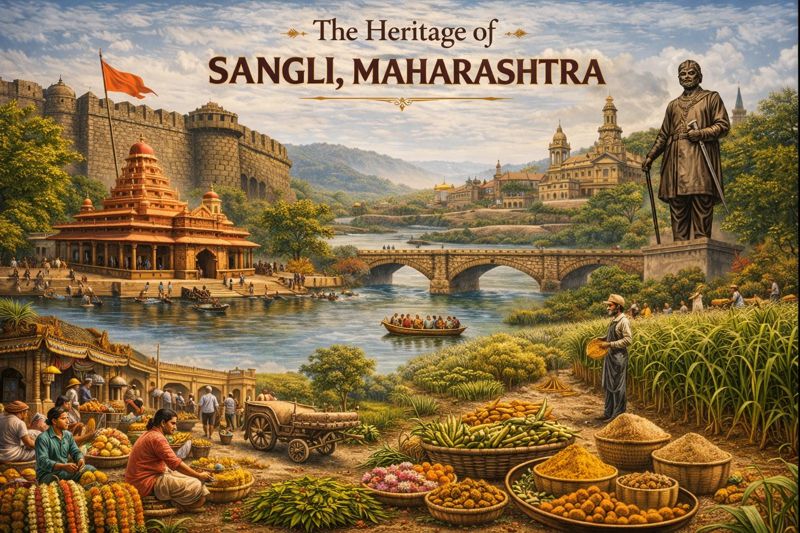
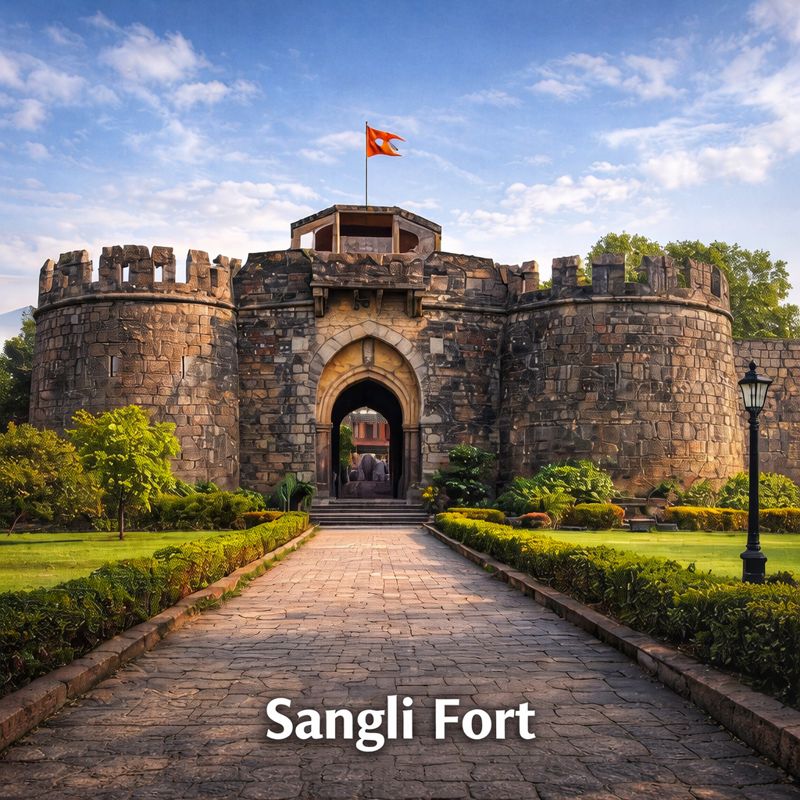
This high-quality heritage illustration represents the timeless legacy of Sangli, Maharashtra, blending its historical architecture, cultural traditions, and agricultural richness into a single panoramic view. The scene features iconic landmarks such as the historic fort, riverside temples, and stone bridges along the Krishna River, symbolizing Sangli’s royal past and spiritual roots. Traditional marketplaces, sugarcane fields, and turmeric produce reflect the region’s strong agrarian identity and economic heritage. Warm golden tones and intricate detailing create a cinematic portrayal of Sangli as a city where history, culture, and progress coexist harmoniouslySangli’s heritage reflects a harmonious blend of royal legacy, spiritual traditions, and cultural excellence. Shaped largely by the Patwardhan rulers during the Maratha and princely state era, the city developed a strong foundation in art, education, and classical music. Architectural landmarks, historic temples, and royal-era institutions stand as enduring symbols of this rich past.
Culture of Sangli
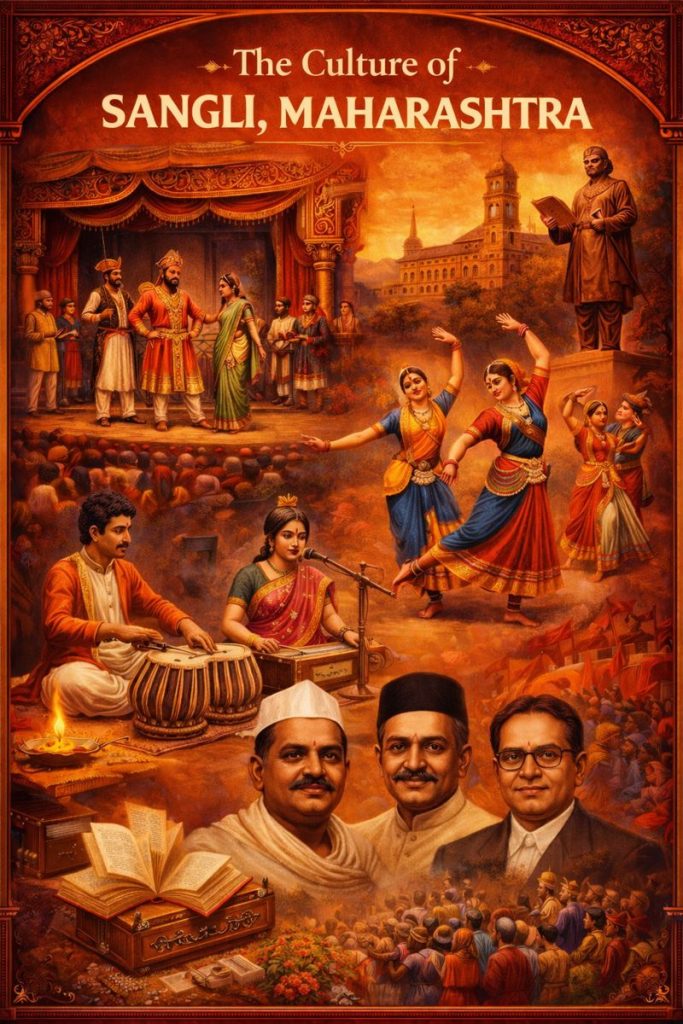
Sangli, known as Natya Pandhari, is a cultural hub of Maharashtra, famous for Marathi theatre, classical music, performing arts, and literary heritage.Discover Sangli’s rich culture as Natya Pandhari, the heart of Marathi theatre, classical music, drama, literature, and vibrant cultural traditions.Explore Sangli’s cultural legacy, celebrated as Natya Pandhari, a center of Marathi theatre, music, arts, and heritage.
Sangli culture, Natya Pandhari, Marathi theatre, cultural heritage of Sangli,Experience Sangli’s vibrant culture, celebrated as Natya Pandhari, a historic center of Marathi theatre,Sangli’s cultural identity as Natya Pandhari reflects its legacy in Marathi theatre, classical arts, music, and centuries-old traditions. performing arts, music, and literature. Maharashtra culture, performing artsExplore Sangli, Maharashtra’s Natya Pandhari, where rich Marathi theatre, cultural festivals, music, and arts thrive alongside modern life
Sangli’s culture is deeply rooted in tradition, learning, and artistic expression. The city is widely known as a cultural center of southern Maharashtra, especially for its strong legacy in Indian classical music, literature, and education. For generations, Sangli has nurtured musicians, scholars, and artists, earning respect as a hub of refined cultural values.
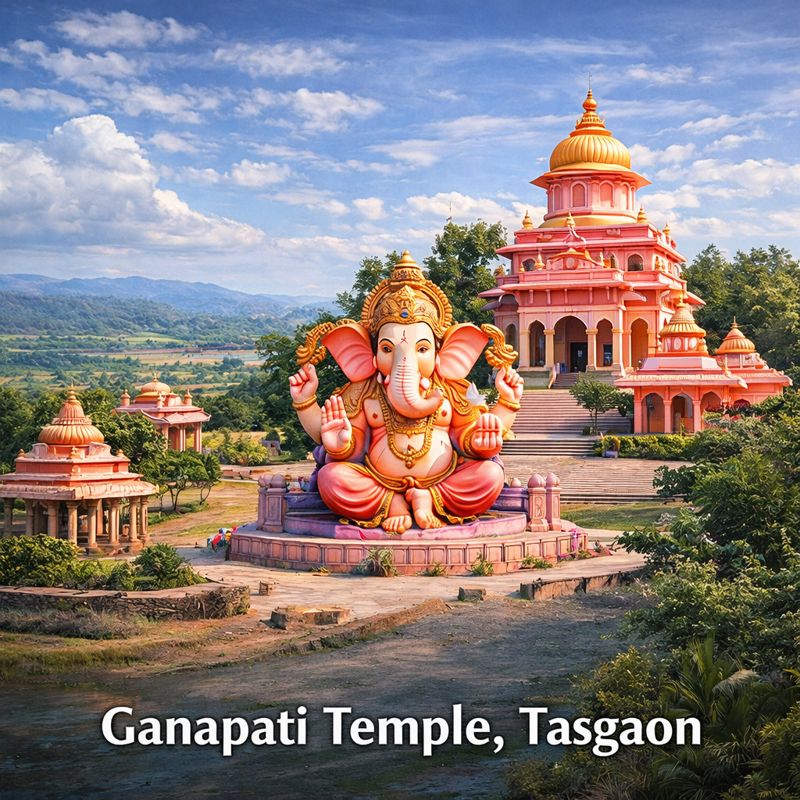
Festivals such as Ganesh Chaturthi, Makar Sankranti, Diwali, and Gudi Padwa are celebrated with devotion and community spirit. Music concerts, bhajans, kirtans, and cultural gatherings are an integral part of social life, reflecting the city’s artistic temperament. Marathi language, customs, and cuisine form the foundation of everyday life and traditions.
Tourism
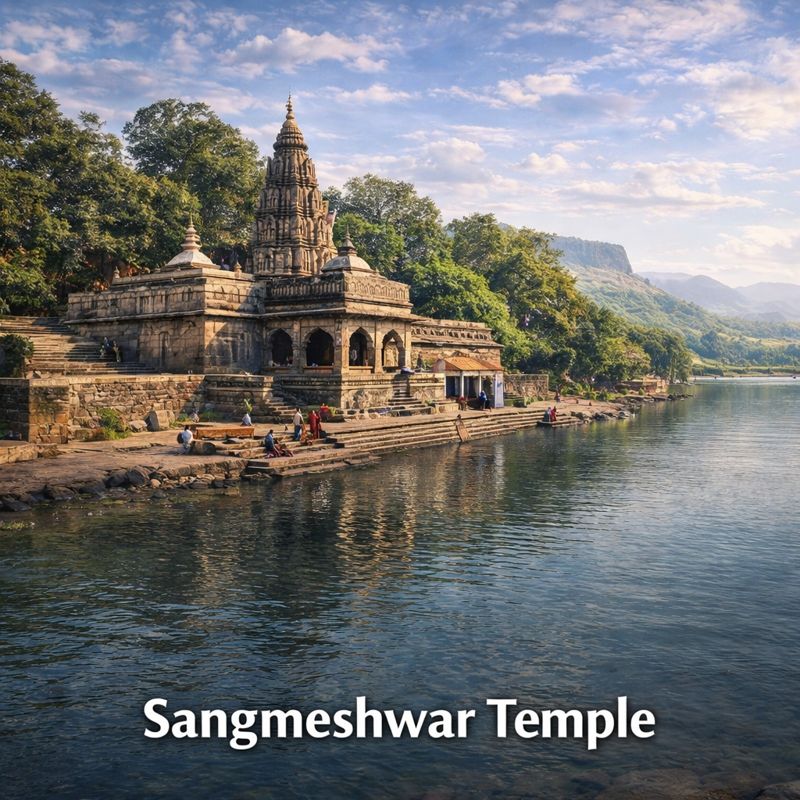
Sangli is a vibrant tourism destination in Maharashtra, known for its heritage sites, temples, river views, wildlife sanctuary, cultural legacy, and agricultural richness.Tourism in Sangli reflects a perfect harmony of history, culture, and nature. From heritage monuments and temples along the Krishna River to wildlife sanctuaries, vineyards, and traditional markets.Sangli offers a rich tourism experience with historic forts, serene river landscapes, vibrant culture, wildlife sanctuary, vineyards, and traditional markets rooted in local life.
Sangli offers diverse experiences for cultural, spiritual, and leisure travelers.Sangli is an emerging tourism destination in Maharashtra, renowned for its cultural heritage, historic landmarks, riverfront temples, agricultural landscapes, wildlife sanctuary, and traditional arts. The city offers visitors a rich and authentic regional experience.Sangli tourism, tourism in Sangli Maharashtra, heritage tourism Sangli, cultural tourism Maharashtra, Sangli travel guide
Sangli is an emerging tourism destination in southern Maharashtra, offering a blend of heritage, spirituality, nature, and culture. The city attracts visitors with its historic temples, royal-era landmarks, scenic hills, wildlife sanctuaries, and proximity to rivers and forests. Religious tourism plays a major role, with ancient temples and sacred sites drawing devotees throughout the year.
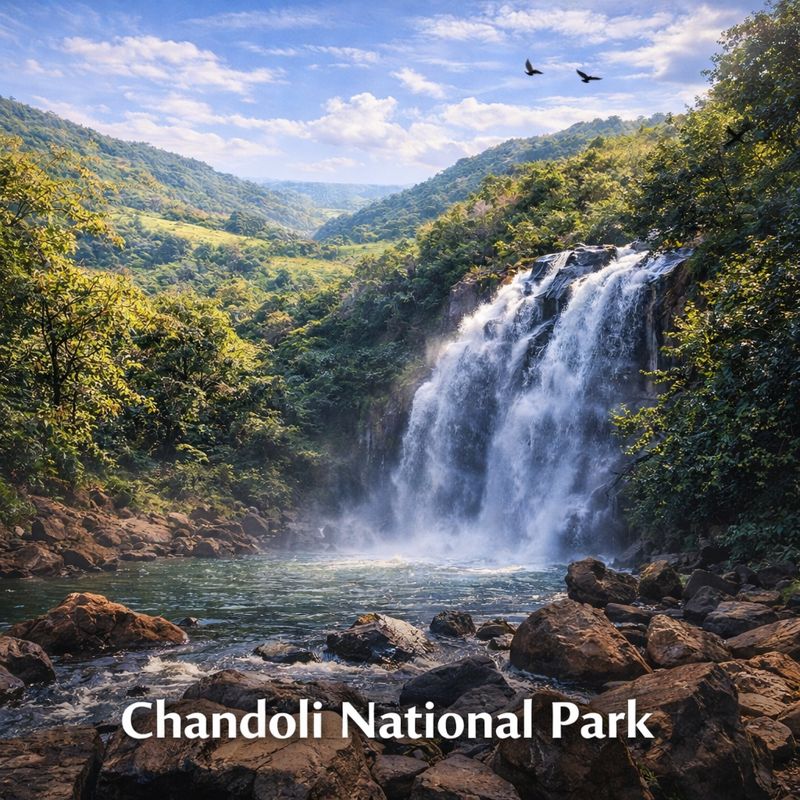
Nature lovers and adventure seekers are drawn to nearby forest reserves, hill landscapes, waterfalls, and wildlife areas, making Sangli a gateway to eco-tourism. The region is also known for its pleasant winter climate, making it ideal for sightseeing and outdoor activities. Cultural tourism thrives through music festivals, traditional celebrations, and local art forms that reflect the city’s rich heritage.
.
Geography and Climate
Geography of Sangli, Maharashtra
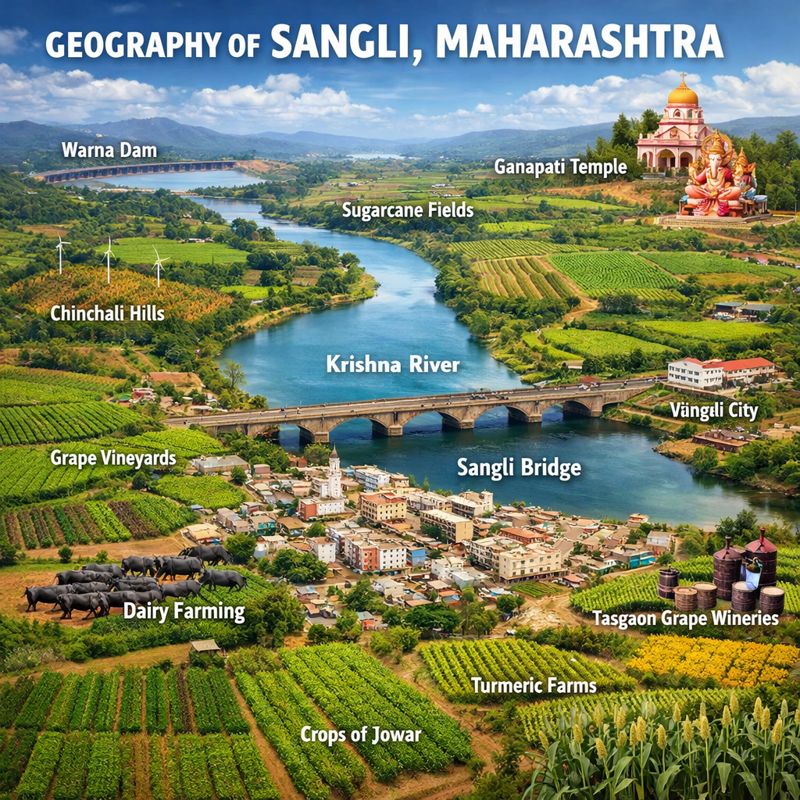
Sangli is located in the western part of Maharashtra and lies along the fertile banks of the Krishna River, which plays a central role in shaping the region’s geography and agriculture.
The terrain is predominantly flat to gently undulating, making it ideal for extensive farming and urban development. The surrounding landscape is enriched with sugarcane fields, grape vineyards, turmeric farms, and jowar crops, supported by well-developed irrigation systems connected to nearby dams and canals.
Low hill ranges appear toward the outskirts, adding subtle elevation contrasts to the otherwise plain topography. This combination of river systems, agricultural plains, and mild hills makes Sangli an important agro-economic region in southern Maharashtra.
The surrounding terrain is mostly flat to gently undulating plains, suitable for farming and settlement.
Climate of Sangli, Maharashtra
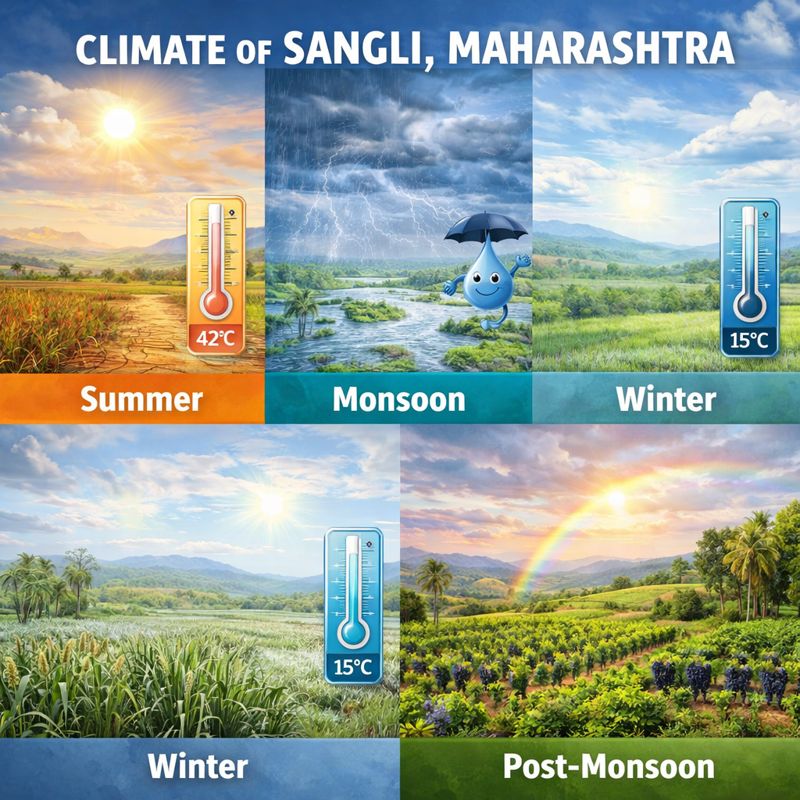
Sangli experiences a tropical semi-arid climate characterized by hot summers, a moderate monsoon season, and mild winters.
Summers, from March to May, are typically very hot, with temperatures often rising above 40 °C due to the city’s inland location.
The monsoon season arrives between June and September, bringing moderate rainfall that supports agriculture and replenishes the Krishna River and irrigation systems.
Winters, from November to February, are pleasant and dry, with temperatures ranging between 12 °C and 20 °C, making it the most comfortable season of the year.
The post-monsoon period sees clear skies, moderate humidity, and refreshed greenery across the region.
Sangli has a generally dry and warm climate, making lightweight clothing suitable for most of the year. Winters are short and pleasant, while summers can be quite hot.
Tourist attractions


Transportation
Road Transportation in Sangli
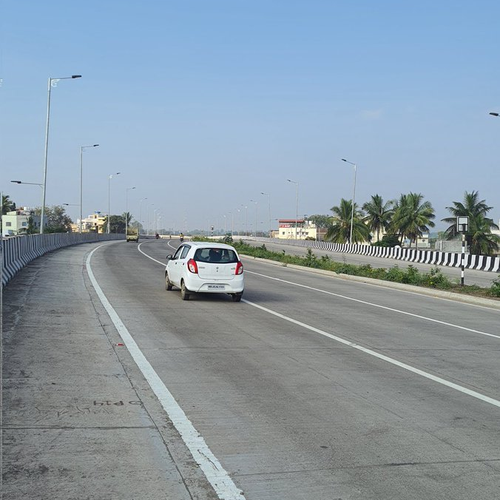
Road transportation is the primary and strongest mode of connectivity for Sangli, supporting daily travel, trade, and regional movement.
Sangli is well linked through state highways and major district roads, connecting it efficiently with Kolhapur, Satara, Solapur, Pune, Belagavi, and Miraj. The Sangli–Miraj–Kupwad urban road network is particularly developed, enabling smooth movement within the city cluster.
Overall, rail transport strengthens Sangli’s position as a strategic transport and trade center in southern Maharashtra.
Rail Transportation in Sangli
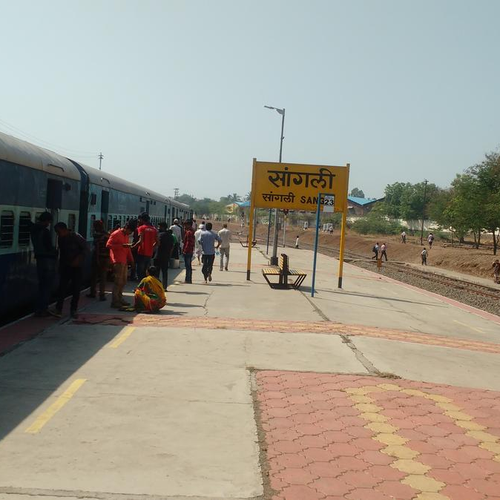
Rail transportation is a vital mode of connectivity for Sangli, playing a key role in passenger travel, trade, and regional integration.
Sangli is served by Sangli Railway Station and the nearby Miraj Junction, one of the most important railway hubs in southern Maharashtra. Miraj Junction connects major routes from Mumbai, Pune, Bengaluru, Hyderabad, Goa, and Chennai, making Sangli easily accessible from both western and southern India.
Overall, rail transport strengthens Sangli’s position as a strategic transport and trade center
✈️ Air Transportation in Sangli
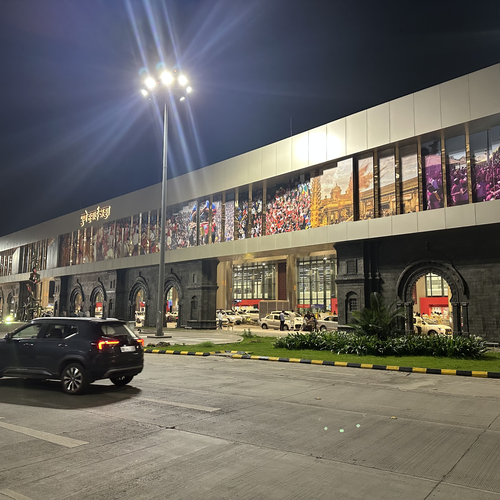
Sangli does not have its own airport, but it is well connected to air transport through nearby airports, making air travel practical for residents, businesses, and visitors.
The nearest airport is Kolhapur Airport, located about 50 km from Sangli, followed by Belagavi Airport at around 70 km. For wider domestic and international connectivity, Pune International Airport (approximately 230 km) serves as the major gateway. These airports connect Sangli to key cities such as Mumbai, Delhi, Bengaluru, Hyderabad, and Chennai, with international travel accessible via Pune or Mumbai.
Area and Population
Area of Sangli City
Municipal area: ~ 82–85 square kilometers
Sangli–Miraj–Kupwad Urban Agglomeration area: ~ 118–120 square kilometers
Population of Sangli
Sangli city population: ~ 502,000 (5.02 lakh)
Sangli–Miraj–Kupwad Urban Agglomeration: ~ 870,000 (8.7 lakh)
Sangli stands out as a city that offers the perfect balance of infrastructure, connectivity, and business potential. Its strategic location in southern Maharashtra makes it a key link between major cities and neighboring states, enabling smooth movement of people and goods.
The city is supported by strong infrastructure, including well-planned roads, reliable rail connectivity through Miraj Junction, and easy access to nearby airports. This integrated transport network ensures efficient logistics, reduced travel time, and dependable daily commuting.
Sangli is also business and trade friendly, with a growing commercial ecosystem that supports agriculture, industry, education, healthcare, and retail sectors. Cost-effective operations, availability of skilled manpower, and improving urban facilities make it an attractive destination for investment and expansion.
With safe and convenient travel, affordable living, and continuous development, Sangli offers excellent growth opportunities for residents, entrepreneurs, and visitors alike. Overall, it is a city built on reliability, accessibility, and future-ready infrastructure—making it a smart choice for living, business, and travel.